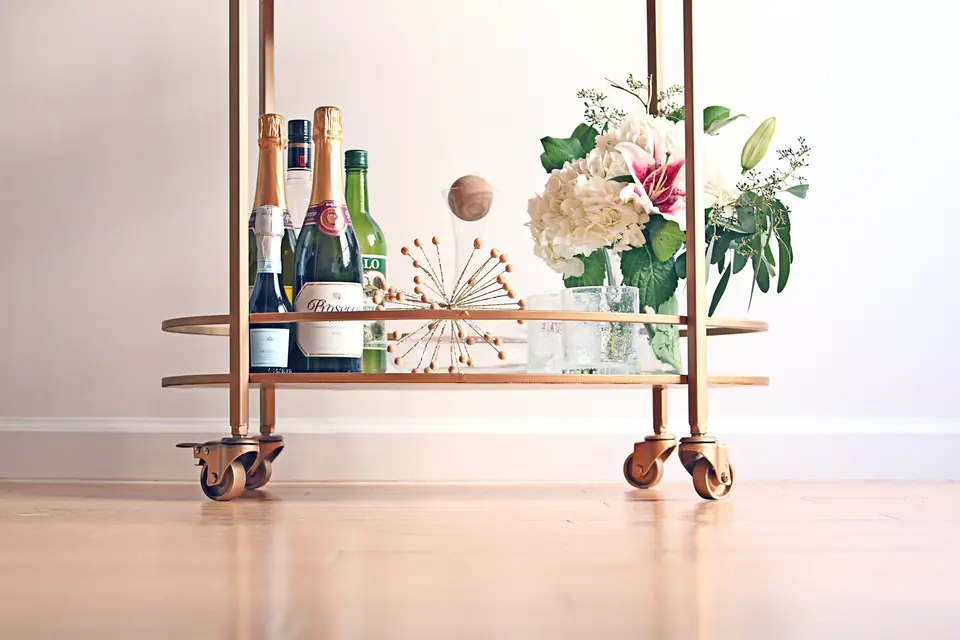
What to build the frame from
Most trolleys use thin metal tube in brass, brass-plated steel, chrome or powder-coated steel, welded or bolted at the corners. A timber frame is easier to make at home but needs thicker legs for the same stiffness. Either way, shelves fixed firmly to all four legs, or a diagonal brace under the lower shelf, stop the trolley racking sideways when it is pushed.
The top shelf usually sits a little below worktop height, so it works as a surface for mixing drinks. A handle at one or both ends gives you something to push other than the shelf.
| Frame | Look | Weight and stiffness | Care |
|---|---|---|---|
| Solid brass | Warm yellow; darkens unless lacquered | Heavy; bends more than steel, so thicker tube | Polish bare brass; damp cloth if lacquered |
| Brass-plated steel | Brass look over a steel core | Stiff in thin tube | Dry cloth; polish wears through the plating |
| Chrome-plated steel | Bright and cool; shows fingerprints | Stiff in thin tube | Soft cloth; rust starts at chips |
| Powder-coated steel | Matt or satin colour | Stiff in thin tube | Damp cloth; touch up chips |
| Timber | Warm, with visible grain | Light, but needs thicker legs | Oil or lacquer; wipe spills quickly |
Marble or glass shelves
Glass shelves must be toughened. Toughened glass cannot be cut or drilled afterwards, so every hole and notch goes on the order. Rest each shelf on small clear rubber bumpers so it does not rattle as the trolley moves.
Marble gives weight and a cool, solid top, but lemon juice, wine and many mixers are acidic and etch dull rings into it. Seal it as you would a marble table top, and keep cut fruit in a dish. If only one shelf is stone, make it the lower one: a marble top shelf raises the centre of gravity, and the trolley tips more easily at a threshold.
Bottle cut-outs and gallery rails
A gallery rail is the low raised edge around a shelf. Without one, bottles creep towards the edge every time the bar cart is pushed. A rail a few centimetres high holds them back and still lets a hand lift a glass out.
Some designs have round cut-outs in a lower shelf or a separate rack, so bottles stand in holes or lie at an angle. Spirit bottles vary a lot in diameter, so measure the ones you own before the holes are cut, and line each hole with rubber or felt.
Choosing the wheels
Two layouts are common. With two wheels at one end and two fixed feet at the other, you lift the handle and roll it like a wheelbarrow, and once set down it stays put. Four castors move more easily, but at least two of them need brakes. Larger rubber-tyred wheels roll over rugs and thresholds quietly, while small hard castors catch on every edge and mark wooden floors.
What to put on a bar cart
The cart holds what you need to make and serve a drink, plus one or two pieces that are only there to be looked at. At a pop-up supper club, the same cart parks by the door with the welcome drinks. Heavy items and spares go on the lower shelf, where they keep the trolley steady.
- Bottles you pour from, and a decanter
- Glasses to match the drinks
- An ice bucket and tongs
- A shaker, jigger, bar spoon and strainer
- A tray for the top shelf
- A dish of lemons or limes
- A small plant or cut flowers
- A book or two
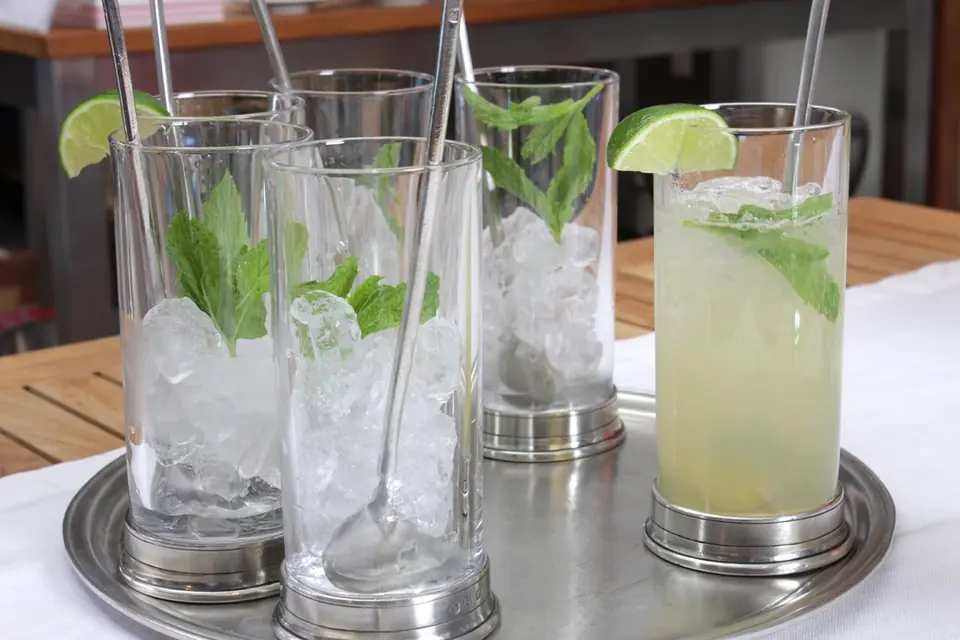
How to style a drinks trolley
Group the top shelf on a tray so it reads as one arrangement: bottles of different heights, a decanter and a small bowl of citrus. Glasses go below or at the front, in no more than two shapes. Add one thing that has nothing to do with drinking, such as a small plant.
For photographs, real labels are often turned away or the drink is decanted into plain bottles. Cold tea passes for whisky or brandy on camera. Polish the glasses with a lint-free cloth and hold them by the base: as on a backlit perfume bottle, every fingerprint on clear glass shows under the lights.
Order of work
- Measure the spot where the trolley will live, the doorways it must pass and the bottles it will carry.
- Draw the frame with shelf gaps that clear the tallest bottle.
- Order toughened glass or stone shelves with every hole and notch marked on the drawing.
- Assemble the frame on a flat floor and make sure it neither rocks nor leans before any shelf goes on.
- Fit the gallery rails and the wheels, then push the loaded trolley over a rug and a threshold.
- Seal a marble shelf and add bumpers under glass ones.
- Move the tallest bottles down a shelf before wheeling it anywhere.
Common mistakes
- Ordering glass shelves and then trying to drill them. Toughened glass shatters when cut, so plan every hole first.
- Putting the stone shelf on top. The trolley becomes top-heavy and tips at a door threshold.
- Leaving off the gallery rail to keep the look clean. Bottles walk off the edge the first time the cart is moved.
- Fitting small hard castors on a wooden floor. They mark the boards and jam on rugs; fit larger rubber wheels.
Questions people ask
What is the difference between a bar cart and a drinks trolley?
Only the name. Bar cart is the American term and drinks trolley the British one. Both mean a small wheeled stand with shelves for bottles, glasses and the things used to serve drinks.
Should a drinks trolley have glass or marble shelves?
Glass is lighter and makes the trolley look smaller. Marble is heavier and steadier, but it etches with citrus and wine, so it needs sealing and a tray. A common arrangement is glass on top and stone below.
How many bottles should go on a bar cart?
Few enough that each one can be seen. A styled trolley usually shows a handful of bottles and a decanter on top, with glasses and an ice bucket below. Crowded shelves also clink and tip more easily when the trolley is moved.
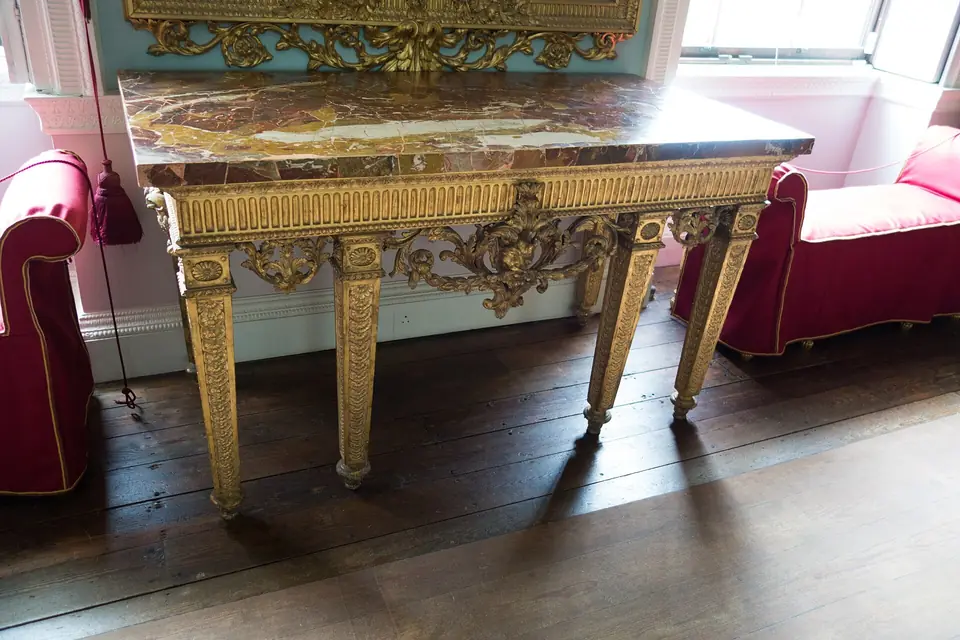 Marble console table: how the steel frame and stone top are made
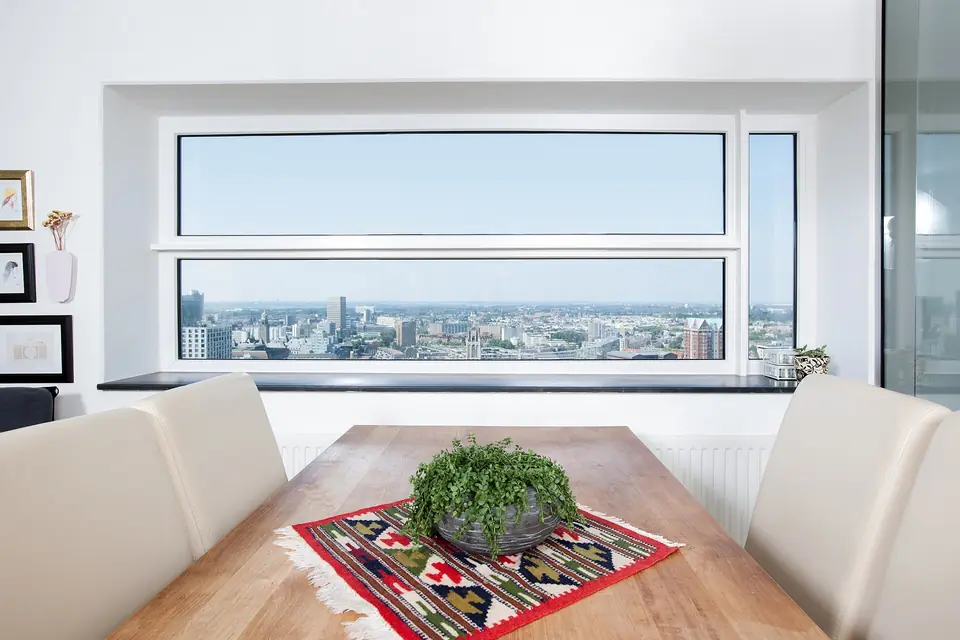 How to set up a pop-up restaurant in a borrowed room
 Interior photo shoot styling: preparing a home for a magazine