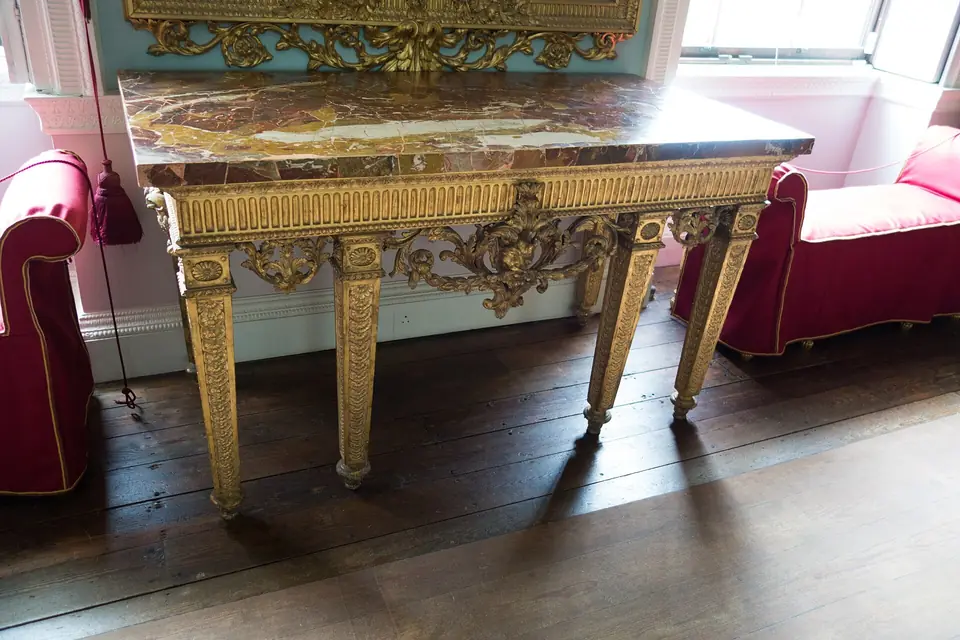
How big a console table should be
A console usually stands between dining-table and worktop height, about 75 to 90 cm. It is shallow, often 30 to 40 cm deep, so it can stand in a hallway, even the tight hall of a townhouse, without narrowing the way through. Leave clear wall at each end so it does not look wedged in. Above it, a mirror or a picture hung low ties the table to the wall.
Behind a sofa, keep it no higher than the sofa back and shorter than the sofa itself. Thin legs under a thick-looking top give the usual balance; a heavy frame under a heavy slab starts to look like a workbench.
Blackened steel frames
The frame is usually mild steel box section or solid square bar, welded at the corners and ground flush. A rectangle of flat bar or angle on top carries the stone. Blackening darkens the steel itself, either with a chemical solution or by heating the metal and quenching it in oil. Both methods need bare, degreased steel, so mill scale and grease come off first.
Blackened steel still rusts. Seal it with paste wax or a clear matt lacquer, and expect fingerprints on waxed steel until it has been buffed a few times. Adjustable glides under the feet protect the floor and take out any wobble.
Calacatta or Carrara marble
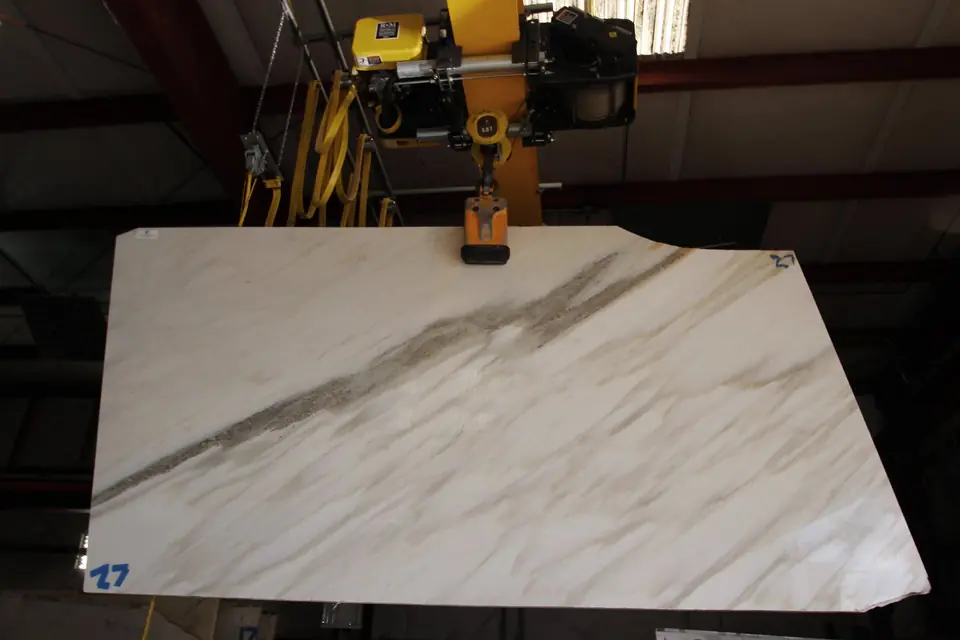
Both are quarried around Carrara in Tuscany. Calacatta has a whiter background with bold, wide veins that run from grey to gold. Carrara is greyer, with finer, softer veining spread evenly across the slab. A narrow top can catch a big Calacatta vein awkwardly, so look at the slab itself and mark where your piece will come from.
Slabs are commonly 20 or 30 mm thick. A 20 mm top can have a mitred edge, where a strip from the same slab is joined to the front at 45 degrees. The edge then looks much thicker and the veining wraps over the corner. Marble weighs about 2.7 tonnes per cubic metre, so even a slim top is a two-person lift.
Fixing the marble top to the frame
Template the stone from the finished frame rather than from the drawing, because welded frames drift by a few millimetres. The top sits flush or overhangs slightly. It rests on the frame and is held by a few dots of clear silicone or stone adhesive, which stops it sliding and still lets it be lifted off. Drilling through the marble to bolt it down is unnecessary and risks cracking the slab.
A narrow table with a heavy top can tip forward when someone leans on it, so fix the back of the frame to the wall with a small bracket.
Sealing and caring for the marble
A marble console table by the front door collects keys, post and wet vases. Marble is calcium carbonate. It is porous, so oil, red wine and make-up soak in and stain, and acids such as lemon juice, vinegar and many household cleaners etch it to a dull patch. An impregnating sealer slows staining but does nothing against etching. A honed, matt finish hides etch marks better than a polished one. Wipe spills quickly and clean with a pH-neutral stone cleaner. A bar cart's marble shelf needs the same care.
Order of work
- Measure the wall or the sofa and fix the height, depth and length on a simple drawing.
- Choose the slab in person and mark which part of the veining the top will use.
- Have the frame welded, ground and checked for square on a flat floor.
- Blacken the frame, then wax or lacquer it before it goes anywhere damp.
- Template the top from the finished frame for the stone cutter.
- Seal the cut marble on its face, edges and underside.
- Set the top on with a few dots of silicone, level the feet and fix a narrow frame to the wall.
Common mistakes
- Cutting the stone to the drawing before the frame exists. Template it from the welded frame.
- Leaving blackened steel unsealed. In a damp hallway it soon shows rust spots; wax or lacquer it.
- Standing a bowl of lemons or a wet vase straight on the marble. Put a tray or a felt-backed dish under it.
- Setting a heavy slab on a narrow frame with no wall fixing. Add a bracket at the back.
Questions people ask
Is Calacatta or Carrara better for a console table?
Both are marble, so both stain and etch in the same way. Calacatta is whiter with bolder, wider veins and suits a plain frame that lets the stone lead. Carrara is greyer with finer veining and sits more quietly in a busy room.
Do you need to seal a marble console table?
Yes. Seal the top after cutting and again whenever water stops beading on the surface. Sealing slows stains from oil, wine and make-up. It will not prevent acids such as lemon juice from etching dull marks.
How do you stop a blackened steel frame from rusting?
Keep it dry and keep a coat on it. Paste wax gives a soft, deep finish and is easy to renew; clear matt lacquer is harder wearing and needs less care. Touch up any scratch that reaches bright metal straight away.
 How to style a bar cart and build a drinks trolley
 How to hang art at home: heights, groups, ledges, frames and light
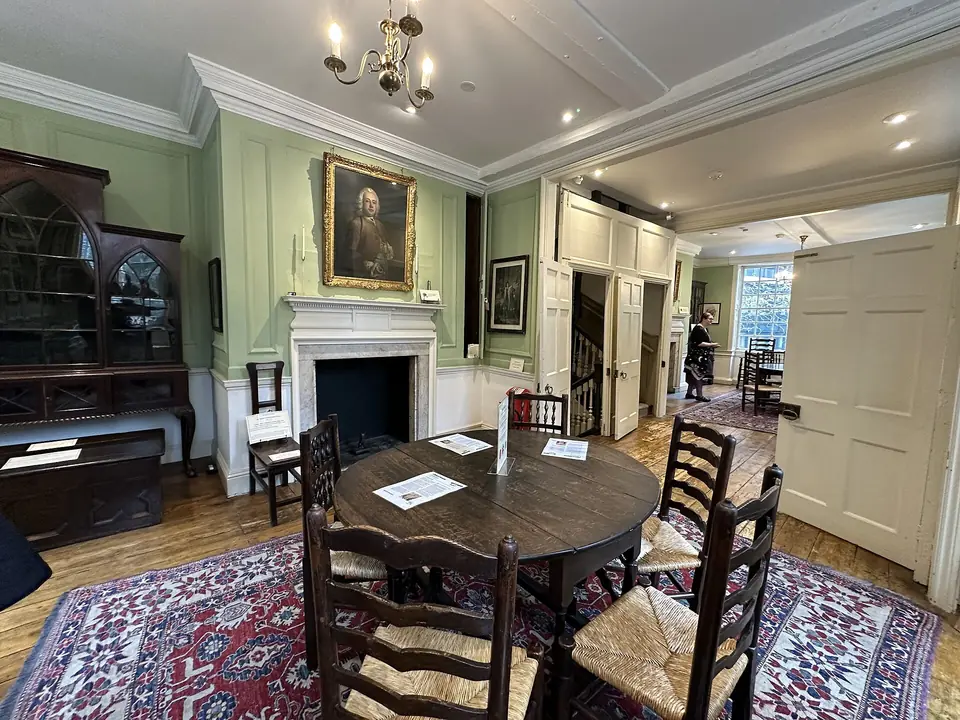 Furnishing a London townhouse interior: layout, furniture and joinery