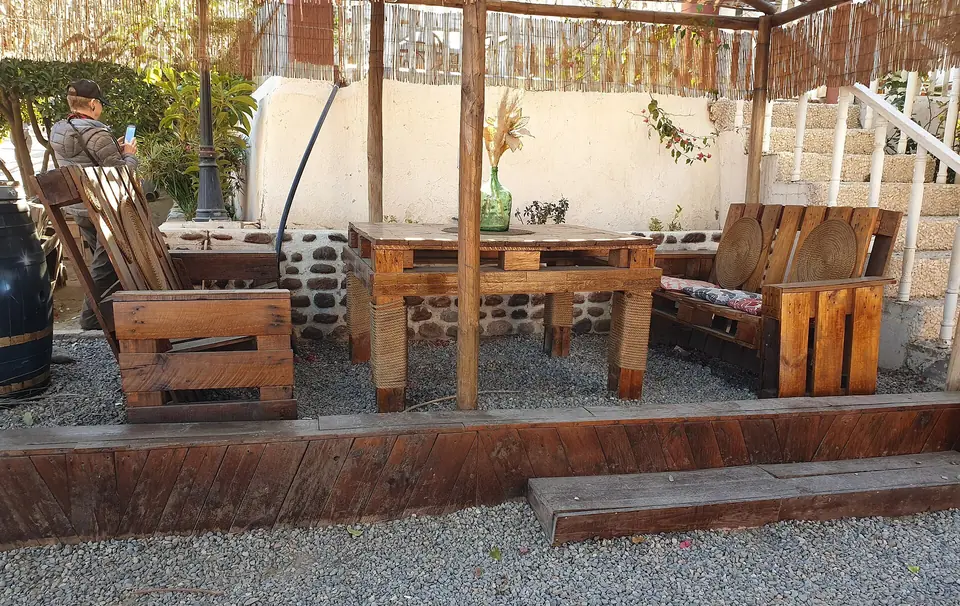
Which pallets are safe to use
Look for the stamp, usually burnt or printed on a corner block or the side board. HT means heat-treated: the wood was heated to kill pests, with no chemicals. MB means methyl bromide, a toxic fumigant, and those pallets should not be used for furniture. You may also see DB, which only means the bark was removed. A pallet with no stamp at all has an unknown history, so leave it.
Check what the pallet carried. Dark stains, oily patches or a chemical smell mean it goes back. Pallets painted a solid colour, often blue or red, usually belong to hire pools that collect and reuse them, so they are not free to take.
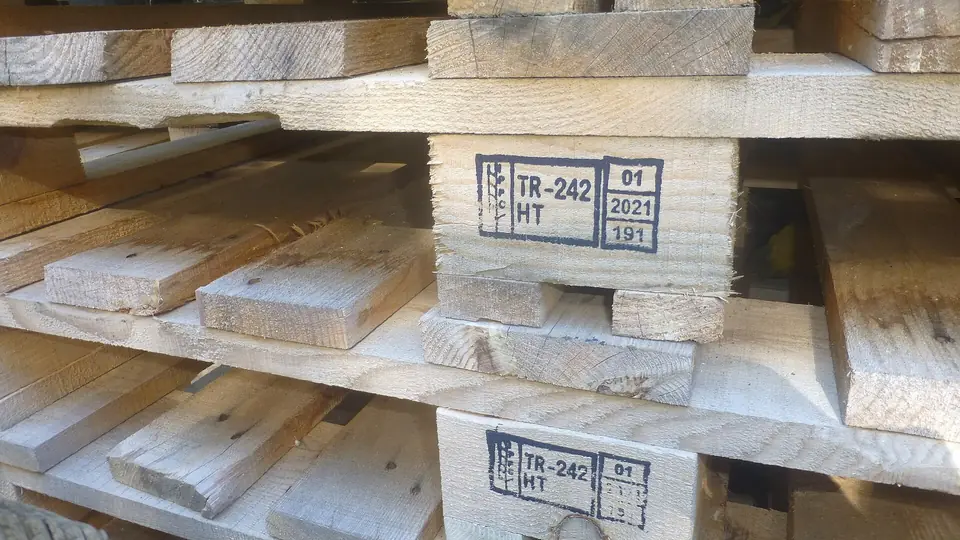
Pallet sizes and seat height
A standard EUR pallet is 1200 × 800 mm and 144 mm high. Two pallets side by side, long edges at the front, make a seat 2.4 m long and 800 mm deep. That depth is generous, and back cushions bring it closer to an ordinary deep sofa.
Two pallets stacked make a frame of about 29 cm. A seat cushion of 10 to 15 cm brings the seat to about 39 to 44 cm, close to a normal sofa. A single pallet with a cushion gives a seat under 30 cm, which suits a terrace lounge better than a living room. Castors add their own height, so allow for them.
How to sand and prepare the pallets
Pallet nails are usually ring-shank or twisted and hard to pull, so punch any that stand proud below the surface. Scrub the boards with soapy water and let them dry for several days. Sand with an orbital sander, starting at a coarse grit such as 80 and finishing at 120, and round over every edge that a leg or a hand will touch. Wear a dust mask, as pallet wood is dirty.
Sand the boards under the cushions as well as the visible sides. Splinters on the top deck work their way through thin cushion covers.
Joining the frame and choosing cushions
Join stacked pallets with long wood screws through the deck boards or with flat metal brackets on the inside faces. For the backrest, stand a third pallet on its long edge and screw it to the back of the base. A pallet cut down lower lets the back cushions lean at a slight angle. Felt pads or low castors under the base protect the floor.
For a pallet sofa indoors, use seat foam sold as combustion-modified high-resilience (CMHR) for furniture, with zipped covers that can be washed. Foam and covers of this kind also go into modular seating for events. Thin camping-mat foam soon flattens to nothing.
Pallet sofa outdoors or indoors
Outside, raise the bottom pallet on feet so it never sits in water, and coat the wood with an exterior oil or stain. Use quick-dry outdoor foam, which lets rain drain straight through, in covers of outdoor fabric, the kind used on holiday villa terraces. Even then, bring the cushions in or cover them when it rains. Indoors, the frame can be waxed or left bare, and a rug underneath stops it scratching the floor.
Building the pallet sofa
- Collect HT-stamped pallets of the same type, plus one spare to supply repair boards.
- Reject any with stains, smells, cracked blocks or a missing stamp.
- Punch down protruding nails, scrub the pallets and let them dry fully.
- Sand the tops and sides, finishing at 120 grit, and round the edges.
- Stack and screw the base, then fix the backrest.
- Oil or wax the wood and let it cure before the cushions go on.
- Fit feet, castors or felt pads, lay the cushions and sit on it to check the height.
Where pallet sofas go wrong
- Using any pallet found behind a shop. Check for the HT stamp and walk away from MB or unstamped ones.
- Sanding only the sides. Splinters from the top boards come through the cushion covers.
- Forgetting that castors and cushions both add height. Stack the pallets, sit on them with the cushion in place, then decide.
- Leaving the bottom boards on wet paving. They soak up water and rot; put the sofa on feet.
Pallet sofa questions
Are pallets safe for indoor furniture?
Heat-treated pallets marked HT are generally fine once cleaned and sanded. Avoid pallets marked MB, which were fumigated with methyl bromide, and any with stains or no stamp. Wash your hands after handling raw pallet wood.
How many pallets do you need for a pallet sofa?
A sofa 2.4 m long needs four EUR pallets for a double-height base, plus two stood on their long edges for the back. A shorter seat 1.2 m long needs two for the base and one for the back. Keep a spare for replacement boards.
Can a pallet sofa stay outside all year?
The frame can, if it is raised off the ground and re-oiled when the wood starts to look dry. The cushions cannot. Store them indoors or in a waterproof box, and expect untreated wood to weather to grey.
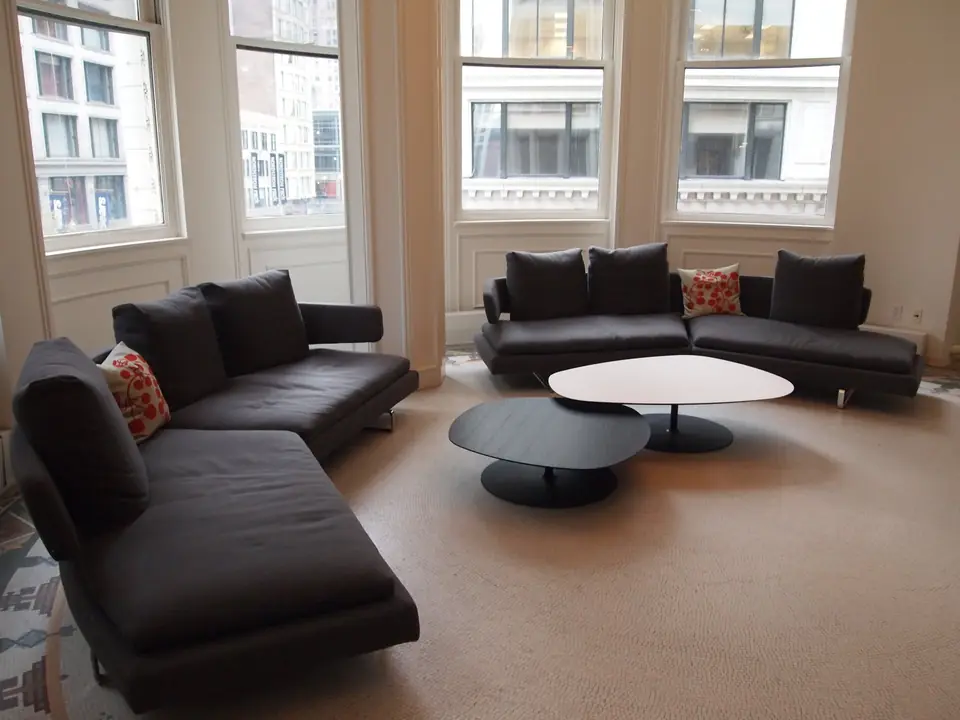 Building event lounge furniture: modular sofas, ottomans and low tables
 Villa interior design for a holiday home or rental
 Prop making basics: foam, plaster, MDF and paint finishes
