Which foam to carve
Two foams do most of the work in prop making. Expanded polystyrene (EPS) is the white, beaded kind used in packaging; it is cheap and light but crumbles when cut with a knife. Extruded polystyrene (XPS) comes as denser, coloured insulation board and carves cleanly with a rasp or blade, so it suits crisp edges and fine detail.
A hot-wire cutter slices both foams without crumbs and is the fastest way to rough out a block, whether for a prop or a foam massing model. It gives off fumes, so open a door or work outside. Stack thin boards for a big shape and glue them with PVA or a foam-safe adhesive. Solvent contact glue and most aerosol paints dissolve polystyrene into a pitted hollow.
Hard coats: plaster, Jesmonite and filler
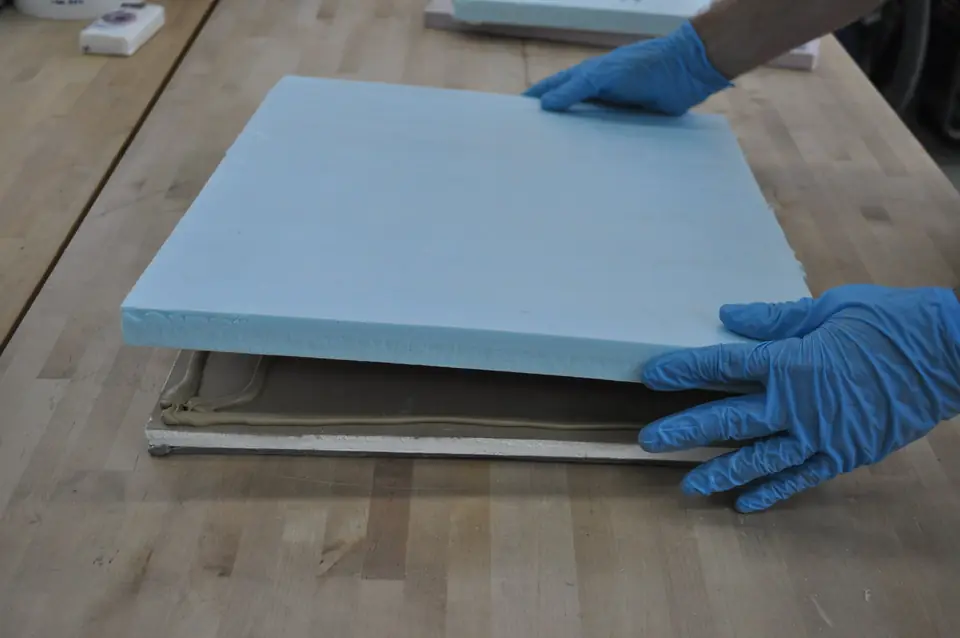
Bare foam dents under a fingernail, so anything touched or lit closely needs a skin. Plaster bandage wraps curved shapes fast and sets in minutes. Jesmonite, a water-based mix of mineral powder and acrylic resin, can be laid up thin over glass-fibre mat and tinted with pigment. That makes it a common choice for fake stone and for plinths that must outlast one shoot.
Plaster always goes into the water, never water onto plaster, and it is stirred only once the powder has soaked through. In a flexible bucket, the set leftovers squeeze out in one piece. Never rinse plaster down a sink, because it sets in the trap.
MDF for bases, ribs and flat parts
Use MDF for anything that must be flat, square or strong enough to stand on: plinth boxes, the internal ribs of a giant object, the base a prop is screwed to. MDF is also the flat backing that keeps mirror acrylic from bowing. Its dust is fine enough to hang in the air, so cut it with extraction and wear a mask rated for fine dust. Standard MDF swells when wet; moisture-resistant board, often tinted green, copes better with damp.
Cut edges drink paint and come up furry. Seal them with diluted PVA or primer and sand lightly before the top coats.
How to make a fake stone
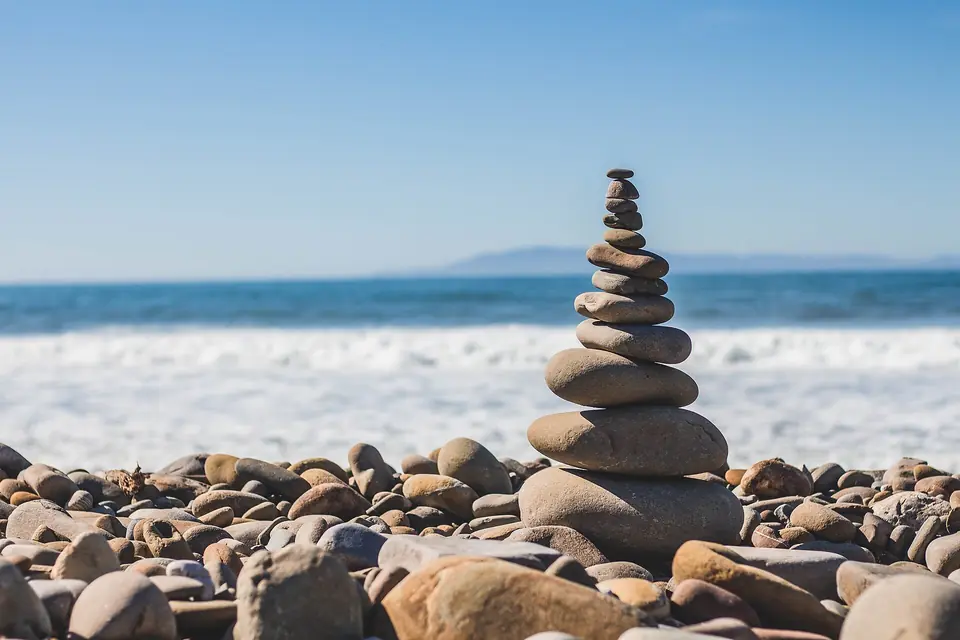
Carve the stone from XPS and keep it irregular and a little flatter than feels right, because real stones sit low. Coat it with Jesmonite or a thick textured filler, then stipple the wet surface with a crumpled plastic bag to break up smooth patches.
One flat grey reads as plastic in a photograph, so build the colour in layers. Paint a dark base, dry-brush lighter tones over the high points only, and flick dark and pale specks off an old toothbrush to suggest grain. Seal with matt varnish.
Paint finishes that work on camera
Matt and eggshell finishes hide brush marks and do not throw the lights back at the lens. Gloss shows every ripple in the surface beneath, so a glossy prop needs much more filling and sanding. Paint the sides the camera will see properly. Check the shot list before skipping the back, because a prop may be turned round between set-ups. On a party or show set, guests walk all the way round, so every side needs finishing.
Order of work for a large carved prop
- Measure the narrowest door, stair and lift on the route to the set, and plan the prop in pieces that fit through them.
- Build an MDF base or internal ribs for anything taller than it is wide, so the foam has something to bond to.
- Glue foam blocks around the ribs and leave them overnight before carving.
- Rough out the shape with a hot wire or a saw, then refine it with a rasp and coarse sandpaper.
- Add the hard coat and sand it once it has fully cured.
- Seal with a water-based primer, then paint from dark to light.
- Fit hidden hand holds and wrap the pieces in moving blankets for transport.
Common mistakes
- Spraying solvent-based paint straight onto polystyrene. It melts into craters; seal it with a water-based coat first.
- Building a giant object in one piece that will not fit through the studio door. Decide the split lines before cutting any foam.
- Painting MDF edges unsealed, which leaves a darker, furry band. Brush the edges with diluted PVA before any colour goes on.
- Pouring leftover plaster down the sink. Let it set in the bucket and knock it out into the bin.
Questions people ask
Which material is best for making props?
Foam suits big, light shapes, Jesmonite or plaster gives a surface that looks and feels hard, and MDF handles anything flat or load-bearing. Most finished props combine at least two of them.
Can you spray paint polystyrene?
Only after sealing it. Most aerosol paints contain solvents that dissolve polystyrene. Brush on a water-based primer, acrylic paint or a thin coat of filler first and let it dry. Some spray paints are sold as safe for foam; test them on an offcut before using them on the prop.
How do you make a prop look heavy?
Give it a wide, flat base so it sits low, paint darker tones where it meets the floor and avoid gloss. On set, move it as if it were heavy. A stone that wobbles when someone brushes past gives the trick away.
 Product photography props: stones, plinths and risers
 Photography surfaces: plaster, concrete, linen, paper and how to make your own
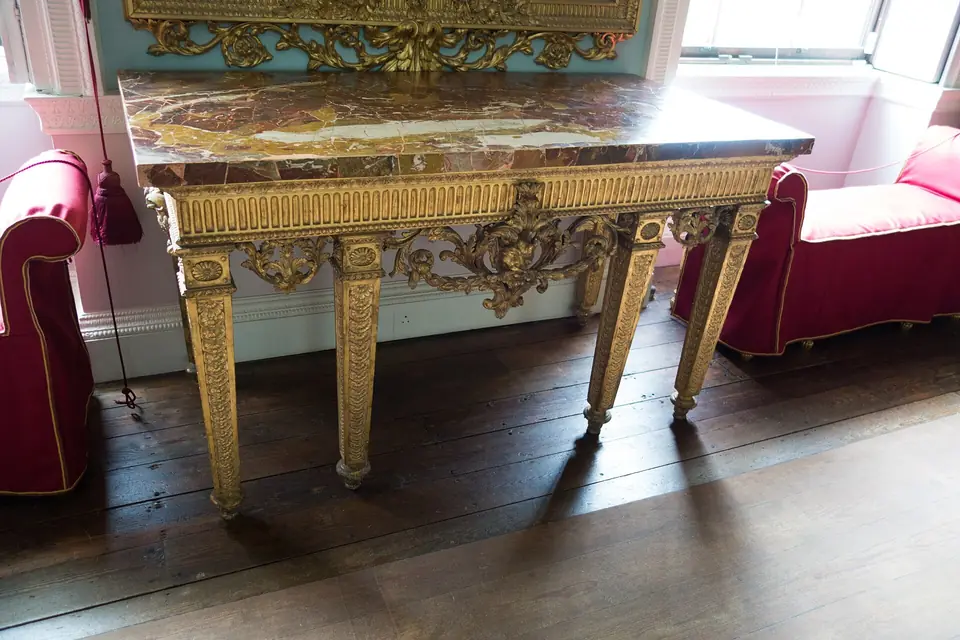 Marble console table: how the steel frame and stone top are made