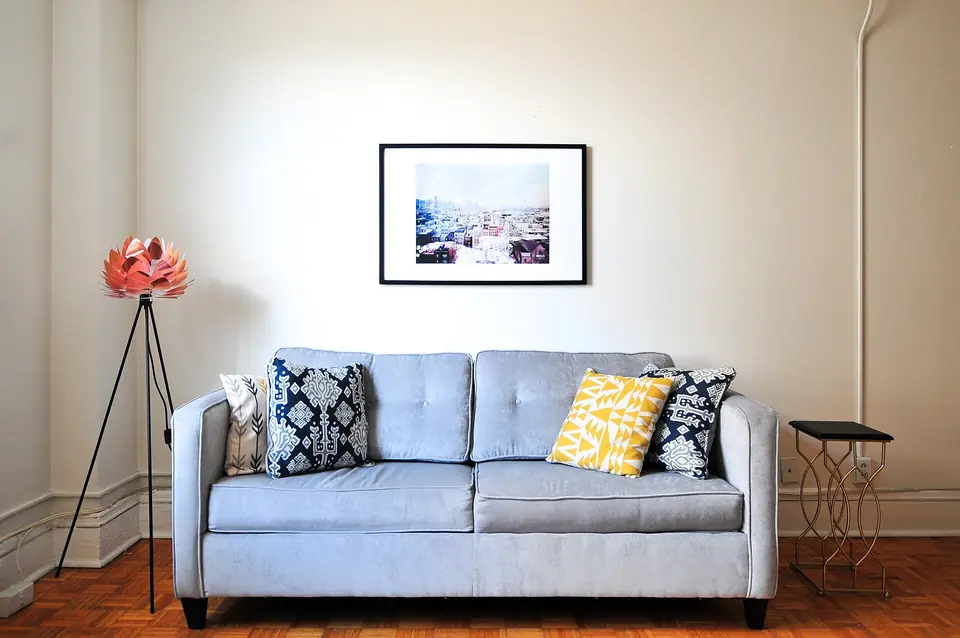
Does home staging help a home sell?
Staging changes how a home comes across before anyone visits. In the listing photos, clear rooms with visible floor show the size and shape of each space. On a viewing, each room reads at once as a bedroom, a dining room or a corner for a desk, so buyers spend less effort seeing past the furniture.
Staging cannot change the location, the layout or the state of the building, and how much it helps depends on the local market and the property. An empty flat often gains a lot from a few pieces, because bare rooms in photographs give no sense of scale.
What to clear before anything goes in
Start with surfaces. Kitchen worktops keep a chopping board and perhaps one bowl, while the kettle, toaster, knife block and spice jars go into cupboards. Toothbrushes, shampoo bottles, the bath mat and the toilet brush leave the bathroom, the toilet lid goes down and towels come off the radiators. Fridge doors lose their magnets and notes.
Then thin out the furniture. A lived-in flat usually has a chair and a side table too many, and each extra piece hides floor. Visible floor lets a room read at its real size in a wide photograph. Family photographs and anything with a name on it go into boxes labelled by room, as personal items do on an office photo shoot.
How the Scandinavian look is put together
The base is pale and plain: white or warm off-white walls, light oak or ash, and white cotton or washed linen on the beds. Against that, add a little texture. A wool throw folded across the foot of the bed and a sheepskin over one dining chair are enough for most flats. On the walls, one or two pictures at eye level are plenty.
Cut branches bring a photo to life more easily than small plants. Birch or eucalyptus stems in a clear glass jug outlast most flowers and hold their shape on camera. One large arrangement on the dining table does more than a row of pots on the windowsills. In the kitchen, a shallow bowl of fruit in a single colour works, such as green apples or lemons.
Lighting the rooms for the listing photos
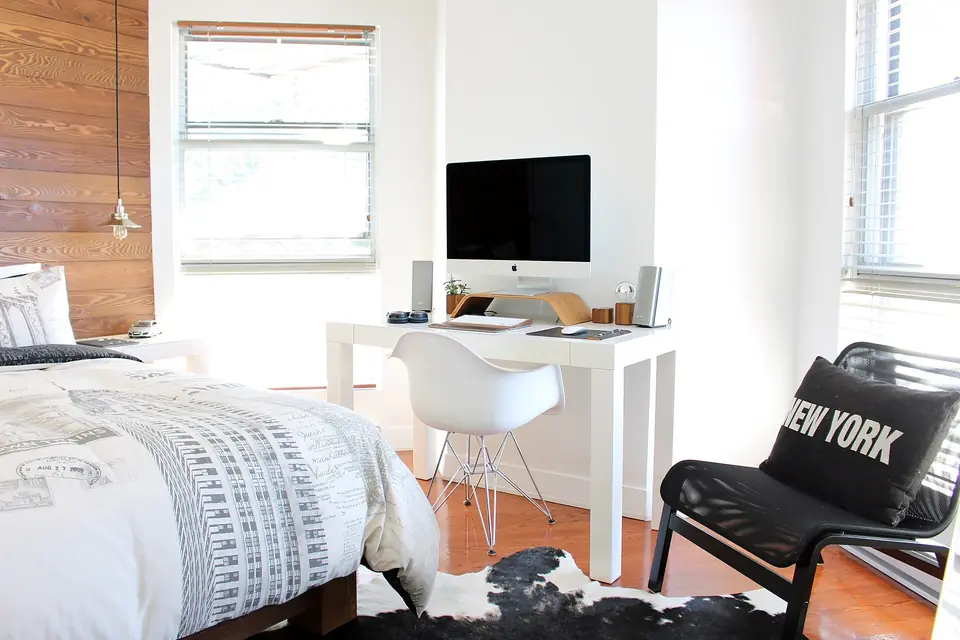
Open every blind and curtain fully and shoot by daylight. A bright overcast day is easiest; on a sunny one, wait until the sun is off that side of the building. Hard sun lands on floors in bright patches that burn out in the picture. Sheer white curtains soften direct light and are worth hanging on bare windows.
Switch lamps on for warmth, but check the bulbs first. Many flats have a warm bulb in one lamp and a cool white one in the ceiling. In a photograph the mix shows as orange and blue patches on the same wall, so change them until every bulb in view matches, and replace any that have blown.
Setting up each shot
Home staging photos are usually taken from a corner or a doorway with a wide lens, to show as much floor as possible. Interiors magazines pull furniture closer for the lens; a listing shows rooms as buyers will find them. Keep the camera level so door frames stay vertical; tilting it upwards makes the walls lean in. Roughly chest height suits most rooms, a little lower in kitchens and bathrooms.
Before each frame, check the screen for a cable across the skirting board or the camera reflected in a mirror. Shooting from slightly off the mirror's line keeps the reflection out. Make the beds tight, with the duvet cover steamed and the pillows standing against the headboard.
Order of work
- Look at each room on a phone screen before moving anything, since the camera shows clutter the eye skips over.
- Box personal belongings and take out spare furniture to open up the floor.
- Clean the windows and polish mirrors and taps, because smears show in sharp photos.
- Make the beds with white linen, steam the covers and fold one throw across the foot.
- Add branches and fruit, then a few textured objects, room by room.
- Match the bulbs and open the curtains, then shoot each room from its best corner.
- Keep the boxes packed until the last viewing, since buyers expect the rooms they saw in the listing.
Common mistakes
- Styling with many small objects. In a wide photo they read as clutter, so use fewer, larger pieces.
- Pushing every piece of furniture against the walls. The middle of the room looks empty; pull the sofa forward and set a rug under its front legs.
- Leaving a black television screen facing a window. It shows a bright reflection, so shoot it from the side.
- Shooting while hard afternoon sun crosses the floor. Wait for cloud or for the sun to move round.
Questions people ask
Does home staging need new furniture?
Usually not. Most flats can be staged with what is already there by removing pieces, rearranging the rest and adding textiles, branches and a few objects. An empty room is the exception, where a bed or a sofa and a small table show what fits.
What makes a flat look Scandinavian in photos?
Pale walls and floors, plenty of daylight, natural materials such as oak, linen, wool and stoneware, and few objects. Colour comes in small amounts, often from green branches or one muted textile.
How long before the photos should a flat be styled?
Clearing and boxing take longest, so start a few days ahead. Leave branches, fruit and bed making for the morning of the shoot, when they look freshest.
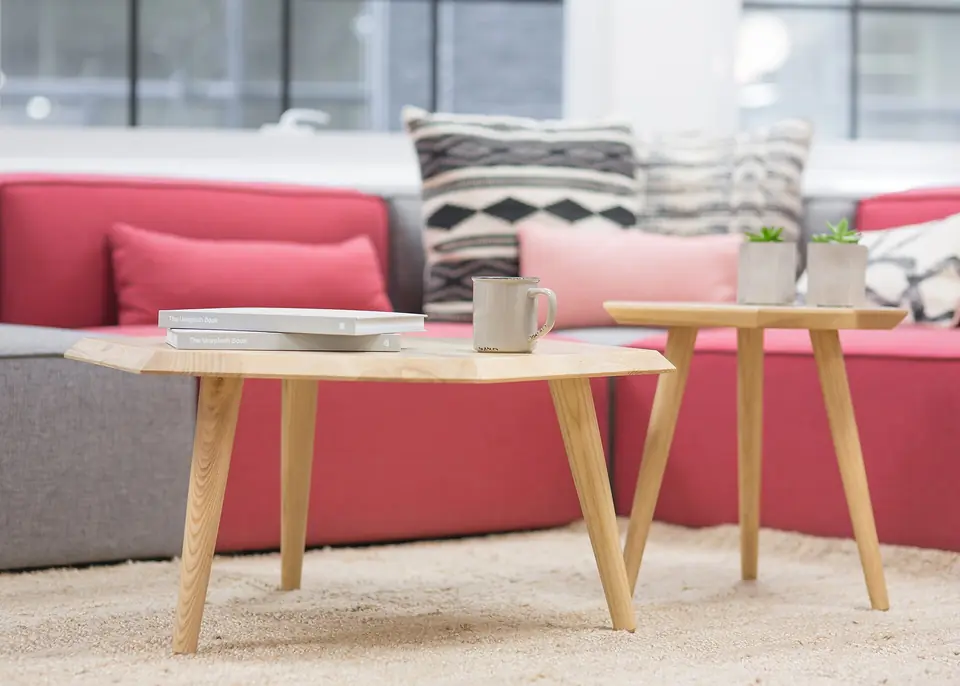 Interior photo shoot styling: preparing a home for a magazine
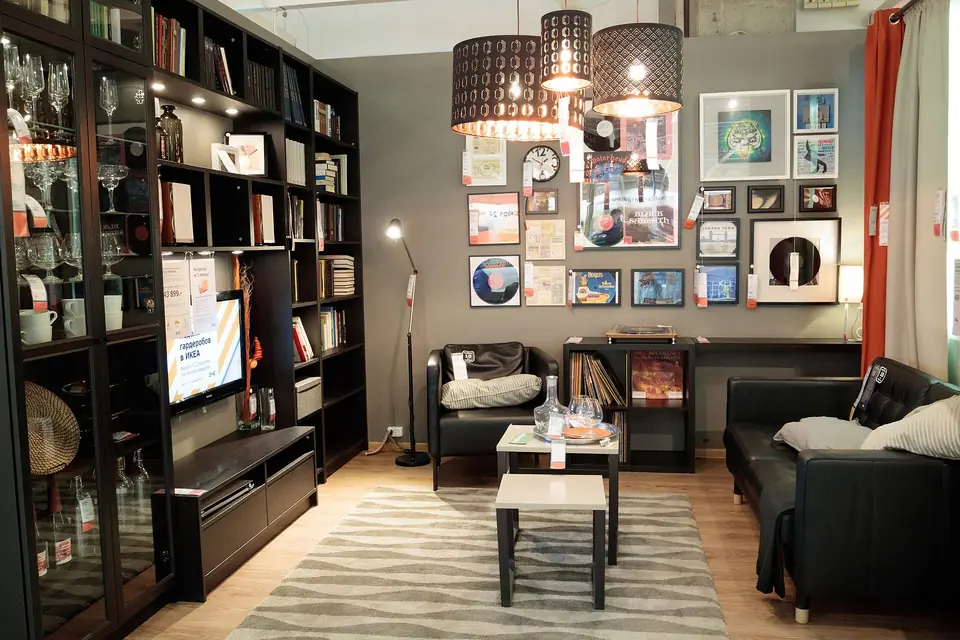 How to hang art at home: heights, groups, ledges, frames and light
 Photography surfaces: plaster, concrete, linen, paper and how to make your own
